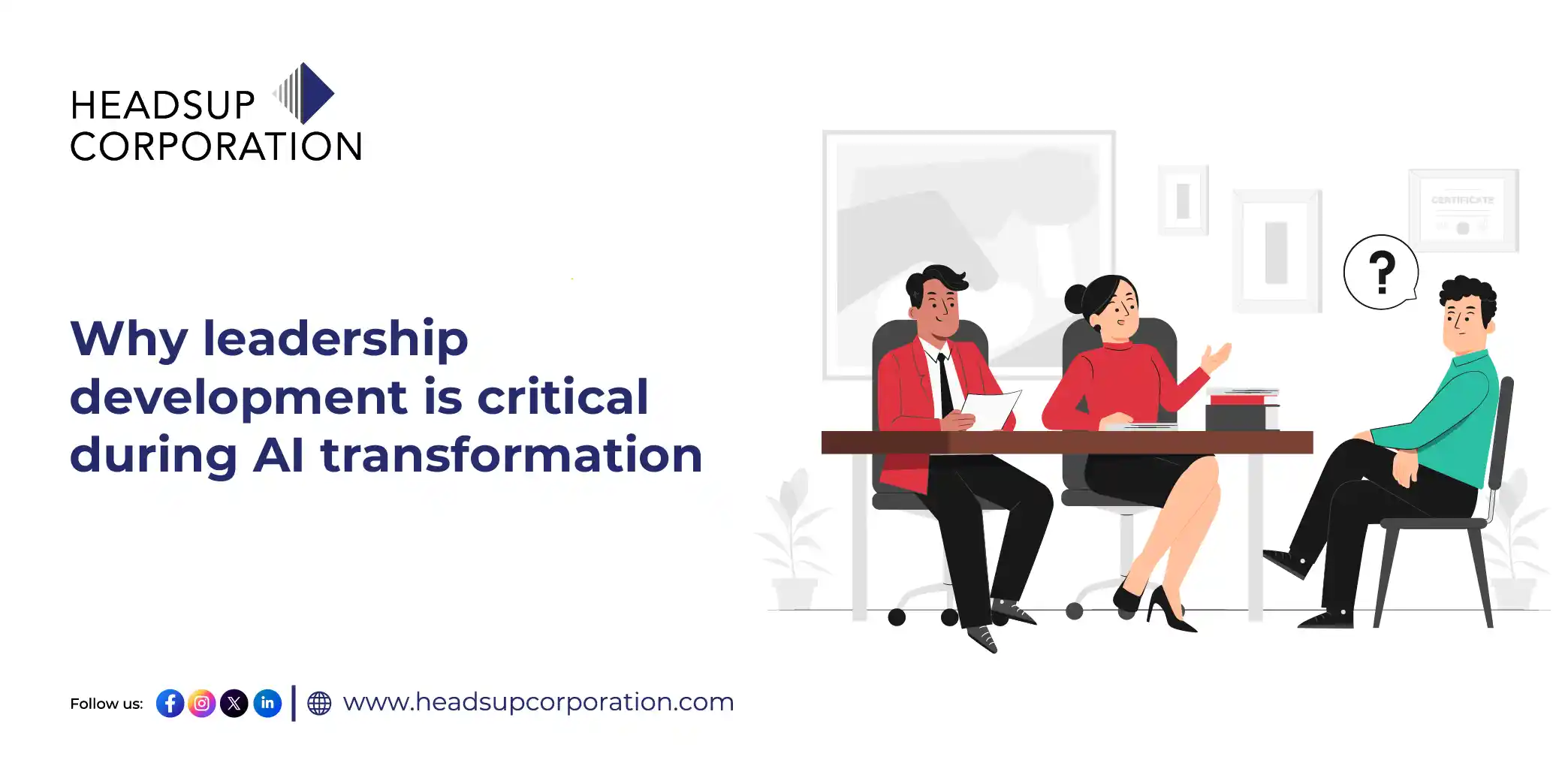
Why Leadership Development is Critical During AI Transformation
65% of Indian IT and tech companies report that their biggest challenge in AI implementation isn’t the technology itself, it’s the people leading the change.
You know, there’s this thing that happens when AI gets introduced into an organisation. Sometimes people get anxious not because they’re resistant to change for the sake of it, but because suddenly the rules of the game are shifting. And if your leaders don’t understand what’s happening, not just technically, but emotionally, strategically, then your entire transformation becomes slightly chaotic.
Think about it this way: AI doesn’t care about your organisational hierarchy. It doesn’t respect seniority or years of experience. It just processes information and produces outputs. So when you’ve got leaders who are still operating from a 2019 playbook, trying to manage teams navigating a 2026 reality, something’s gotta give. Usually, it’s trust. And morale. And sometimes, your best people walk out the door.
What’s Really Happening Here
The transformation we’re talking about isn’t just about implementing new tools. It’s about fundamentally rethinking how work gets done, what skills matter, and how people relate to their jobs. In India specifically, where we’ve got this incredible mix of traditional corporate structures and hyper-modern tech adoption, this tension is even more acute. You’ve got teams where some members are GenZ digital natives and others are seasoned professionals who remember pre-internet office culture. All these folks need to work together, and suddenly AI is in the room.
Leaders need to become translators. Not of code or algorithms, but of meaning. They need to help people understand that AI might change their job description, but it shouldn’t change their value. That’s actually harder than learning the technology itself.
Why Does This Matters And Why Now?
Here’s the thing nobody tells you: companies that invested in leadership development before rolling out AI saw 47% better adoption rates and 3.2x higher employee retention during transition. That’s not a coincidence. It’s because leaders who were trained to communicate change, manage anxiety, and build psychological safety could actually pull their teams through it.
Without that? You get resistance that looks like incompetence. You get talented people deciding the grass is greener elsewhere. You get burnout, duplicated efforts, and basically, transformation theater, all the appearance of change with none of the actual progress.
The How: Building Your Leadership Infrastructure
So what does actual leadership development for AI transformation look like? It’s not a one-day workshop, I can tell you that much. It’s usually three pillars working together.
- First, technical literacy, and I mean basic, not doctorate-level. Leaders need to understand what AI can and can’t do, where it adds value, where it creates risk. They need to be able to have conversations with their tech teams in a shared language.
- Second, change management and emotional intelligence. This is where a lot of organisations stumble. They focus entirely on the AI part and forget that humans are still involved. Leaders need to recognize when their teams are anxious, burnt out, or struggling. They need to have those uncomfortable conversations early.
- Third, strategic thinking around talent. What skills are becoming obsolete? What’s emerging? Where do people need to shift? Leaders who can map this out proactively don’t just keep their teams functioning, they turn people into advocates for the change.
A practical example: a mid-sized financial services firm in Bangalore ran a 6-month leadership program focused on AI transformation. They didn’t just talk about machine learning models. They had leaders map out which processes in their own teams were being automated, had them interview their people about fears and opportunities, and then worked through change communication strategies. Three months into their AI rollout, they had the highest engagement scores in the company. Coincidence? No. Intentional development? Absolutely.
Who’s Leading This Anyway?
This responsibility doesn’t sit with just one person. Your Chief Learning Officer, your HR leadership, your technology leaders, they all have a role. But the real ownership? That’s on the CEO and the executive team to signal that leadership development isn’t nice-to-have, it’s essential infrastructure.
AI transformation is happening. That’s not up for debate. What is up for debate is whether your leaders are actually ready for it. Because here’s what really determines success: not the sophistication of your AI systems, but the capability of the people steering them. Invest there, and everything else gets easier.