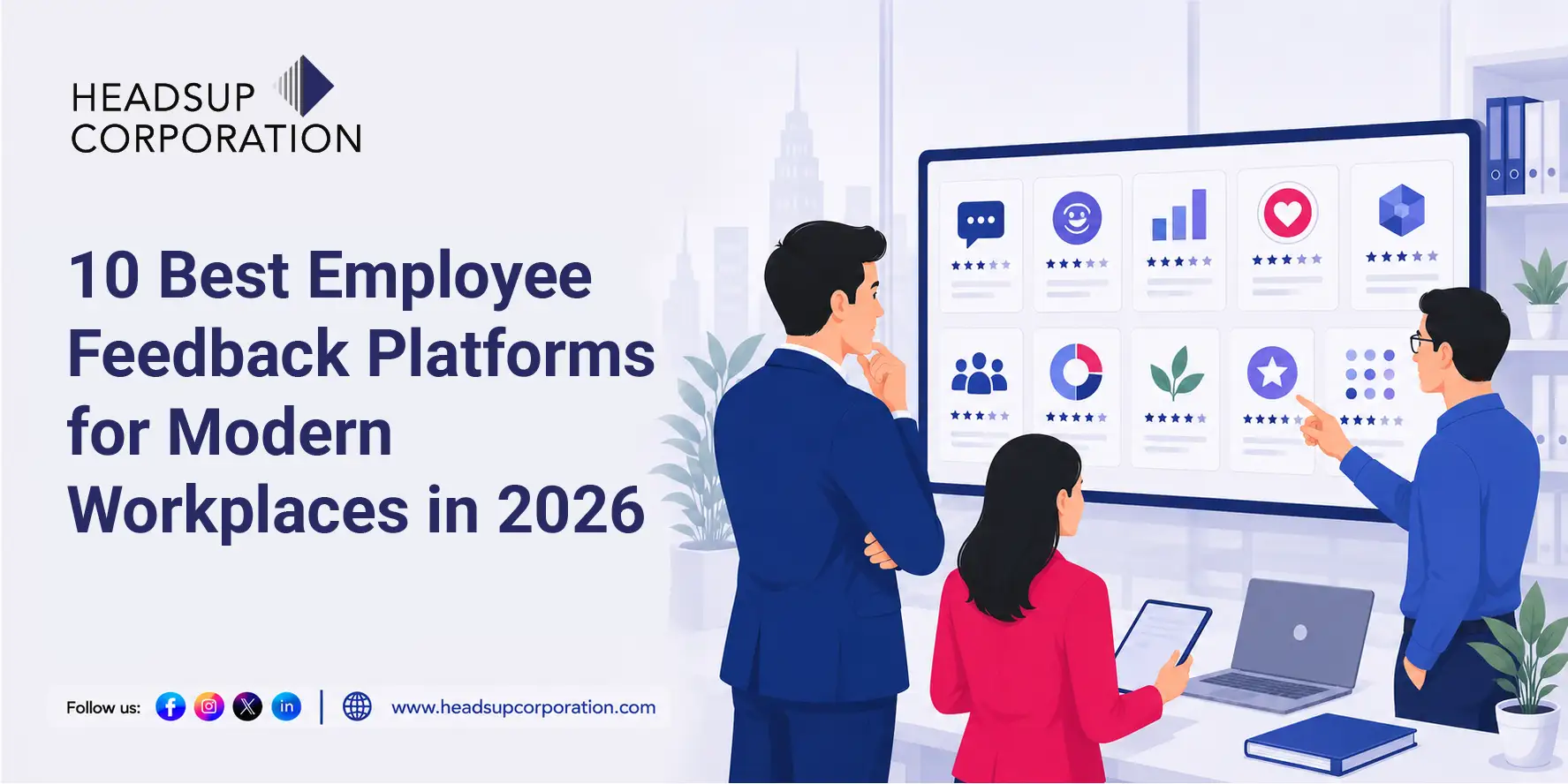
10 Best Employee Feedback Platforms for Modern Workplaces in 2026
Employee expectations have shifted. People no longer wait for an annual review to share how they’re feeling about their work, their manager, or their team. They want to be heard in real time, and they want to see that their feedback actually changes something. That shift is why employee feedback platforms have become one of the fastest-growing categories of HR technology heading into 2026.
If you’re evaluating employee feedback software for your organization, the good news is you have more options than ever. The challenge is telling them apart. Below is a rundown of what to look for, followed by the core capabilities separating the best tools from the rest.
Why Employee Feedback Platforms Matter More Than Ever
Engagement surveys used to be a once-a-year event: a long questionnaire, a slow rollout of results, and action plans that rarely materialized before the next cycle began. Modern employee feedback tools replace that with continuous listening, short pulse checks, always-on channels for suggestions, and dashboards that make trends visible to managers as they happen, not months later.
This matters because feedback that arrives too late is feedback that can’t be acted on. A platform that tells you six months after the fact that a team was burning out doesn’t help that team. Speed and visibility are now core requirements, not nice-to-haves.
What to Look for in the Best Employee Feedback Tools
Before comparing specific products, it helps to know what separates a genuinely useful platform from a glorified survey builder:
- Multiple feedback channels, pulse surveys, always-on suggestion boxes, peer recognition, and manager check-ins should all live in one system.
- Anonymity controls: employees need confidence that honest feedback won’t be traced back to them, especially on sensitive topics.
- Real-time analytics: dashboards that surface sentiment trends, flag risk areas, and segment results by team or tenure.
- Action-tracking: the ability to turn feedback into assigned follow-ups, not just a report that sits in a folder.
- Integration with existing HR systems: feedback data is far more useful when it connects to your HRIS, Slack, or performance management tools.
- Manager-friendly reporting: insights need to reach frontline managers in a format they’ll actually use, not just sit in an HR dashboard.
Categories of Employee Feedback Platforms
Rather than a single “best” list, it’s more useful to think in categories, since organizations have different needs:
Continuous listening platforms focus on frequent, lightweight pulse surveys paired with sentiment analysis, ideal for organizations trying to catch problems early rather than waiting for annual results.
Anonymous feedback and suggestion tools prioritize psychological safety, making it easy for employees to flag concerns about culture, management, or process without fear of exposure.
Performance and feedback hybrids combine 360-degree reviews, one-on-one notes, and peer feedback with lighter pulse tools, useful for teams that want feedback tied directly to performance conversations.
AI-powered analytics platforms go a step further, using natural language processing to surface themes across thousands of open-text responses automatically, reducing the manual work of reading every comment.
All-in-one engagement suites bundle feedback, recognition, goal-setting, and performance reviews into a single system, a strong fit for HR teams that want fewer vendors to manage.
Choosing the Right Fit for Your Organization
The “best” platform depends heavily on your organization’s size, culture, and current feedback maturity. A 50-person startup running its first pulse survey has very different needs than a 5,000-person enterprise trying to unify feedback data across a dozen HR systems. Before shortlisting vendors, get clear on:
- How often you actually want to collect feedback (weekly, monthly, quarterly)
- Whether anonymity is a hard requirement or a nice-to-have
- Who needs to see the results: HR only, or every manager
- Whether you need the platform to integrate with existing systems, or can run standalone
Final Thoughts
The employee feedback space in 2026 is defined by speed, transparency, and follow-through. The right platform doesn’t just collect opinions; it turns them into visible, trackable action that employees can feel. As you evaluate vendors, weigh feature checklists against a simpler question: will this actually close the loop between what employees say and what changes as a result?