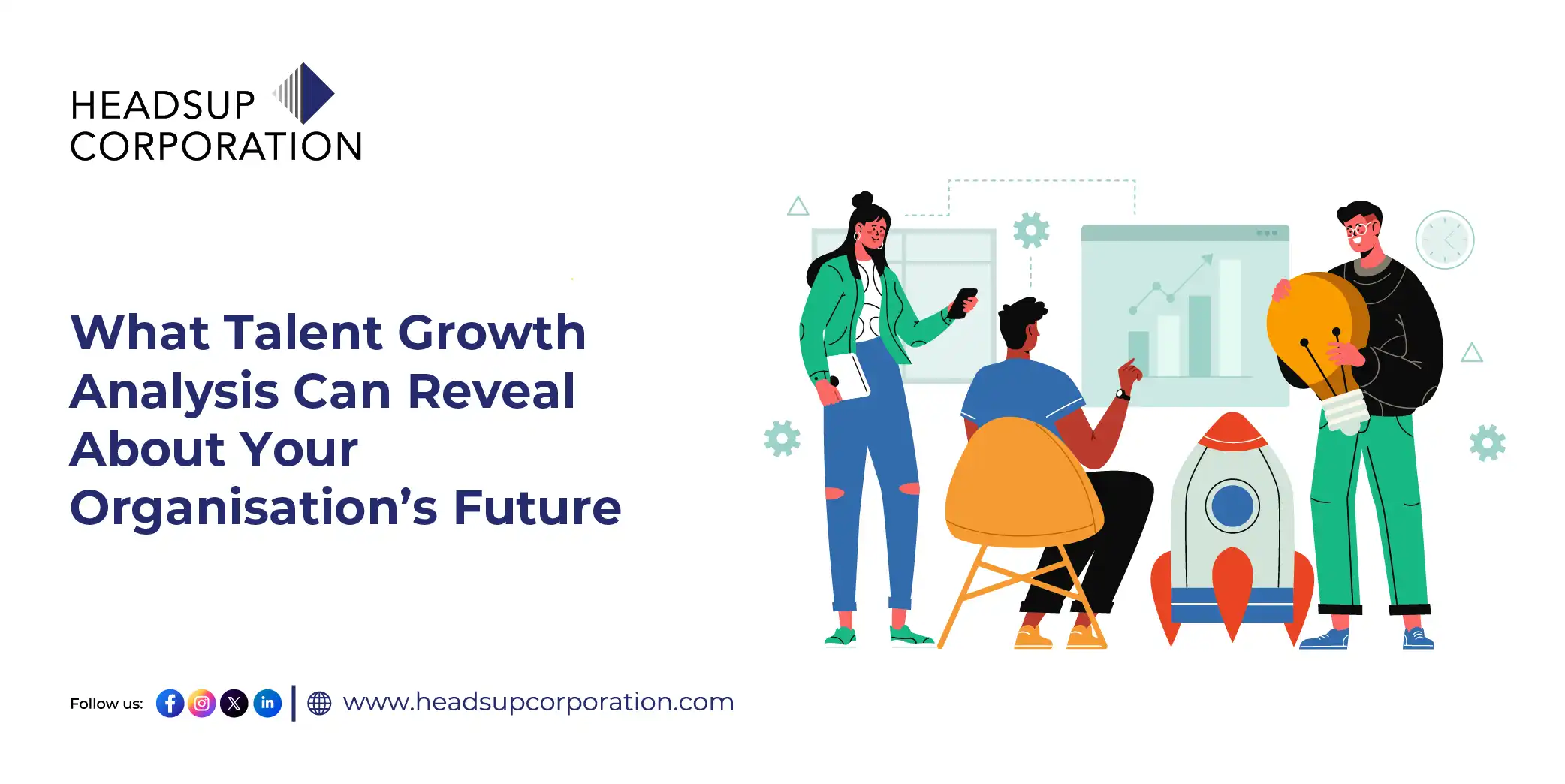
What Talent Growth Analysis Can Reveal About Your Organisation’s Future?
A few years ago, change felt manageable in organisations; you could plan for it. Now, it shows up mid-quarter. Teams are asked to do more with fewer people, from roles quietly stretching beyond their original scope to new tools getting introduced. Tools that promise efficiency, but also demand new skills almost immediately. What used to feel like steady evolution now feels closer to constant adjustment.
And while technology is usually blamed for this pace, the real pressure shows up elsewhere. Leaders are expected to make talent decisions faster, with less margin for error, often without clear visibility into what their workforce can realistically handle next. That gap between speed and clarity is where Talent Growth Analysis starts to matter. Not because it predicts the future perfectly, but because it reduces the frequency with which organisations are surprised by it.
Why Change Feels Faster Than It Used To?
Most organisations aren’t just adopting technology anymore. They’re reorganising around it, sometimes without fully realising it. Take HR. Decisions that were once driven by experience or managerial instinct are now increasingly shaped by dashboards, trend reports, and predictive indicators. Skills are tracked. Engagement is measured. Attrition risk is flagged. The language of people management has shifted, whether teams asked for it or not.
It’s easy to assume HR still runs on annual reviews and static role definitions, but that picture is outdated. Workforce data now influences hiring plans, learning investments, and even leadership succession.
What Talent Growth Analysis Really Is?
Talent Growth Analysis isn’t about monitoring employees or reducing people to numbers. That concern comes up often, and it’s not entirely unfounded. At its best, it’s a way of understanding patterns. How people grow. Where growth stalls. Which skills compound over time, and which don’t? It looks at progression, performance trends, mobility, attrition signals, and future capability needs, then asks a simple question: Does our talent trajectory match where the business is heading? This goes beyond headcount planning. It’s closer to reading a map while you’re already moving.
Five Ways Talent Growth Analysis Actually Helps
1. It Surfaces Gaps Before They Turn Costly
Skill gaps rarely announce themselves. They show up as missed deadlines, over-reliance on a few individuals, or repeated external hiring for the same capability. Growth analysis helps spot these patterns early, when correction is still possible.
2. It Makes Hiring Decisions Less Reactive
Hiring often happens under pressure. Data won’t remove that pressure, but it can clarify whether a role is genuinely needed now, or if the issue lies elsewhere, such as workload design, capability mismatch, or poor role definition.
3. It Adds Context to Attrition
People rarely leave “out of the blue.” Performance dips, stagnation, or disengagement usually appear first. Talent growth analysis helps connect those dots before resignation letters do.
4. It Shifts Focus From Performance to Potential
Current performance is easy to measure. Future contribution isn’t. Growth analysis encourages organisations to look at learning velocity, adaptability, and trajectory, especially useful when planning leadership pipelines.
5. It Grounds Strategy in Reality
Ambitious growth plans sound good on slides. Talent data often tells a more cautious story. When leaders align strategy with actual workforce capability, decisions become more realistic and less reactive.
Talent growth analysis isn’t about control. It’s about awareness. Organisations that understand how their people are evolving tend to make calmer decisions. They plan with fewer assumptions and fewer surprises. In an environment where change is constant, that kind of clarity isn’t just useful. It’s stabilising.